Bathroom Remodeling Queens – Complete GuideLet’s be honest here—your bathroom is probably one of the most used rooms in your entire home, and if you’re living in Queens, you know exactly what I’m talking about. Maybe you’ve got one of those classic pre-war apartments with tiny bathrooms that somehow feel even smaller than they actually are. Or perhaps you’re in a newer construction that came with builder-grade finishes that looked fine at first but now feel dated and, well, kind of cheap. Whatever your situation is, bathroom remodeling in Queens has become something of a necessity for homeowners who want to actually enjoy their morning routine instead of dreading it.
I’ve noticed that Queens homeowners tend to have pretty specific challenges when it comes to bathroom renovations. Space is almost always an issue—we’re not working with sprawling suburban layouts here. And then there’s the whole thing about building codes, permits, and working with contractors who actually know the neighborhoods. It’s not like renovating a bathroom in the suburbs where you’ve got plenty of room to spread out and time doesn’t feel quite as urgent. Queens moves fast, and your renovation needs to keep up. The good news? With the right approach, you can transform even the most cramped or outdated bathroom into something that genuinely makes you happy every single day.
Here’s the thing about bathroom remodeling that nobody really talks about enough: it’s one of the best investments you can make in your property. We’re talking serious return on investment here, especially in Queens where real estate values continue to climb. A well-designed bathroom doesn’t just make your daily life better—it adds actual dollar value to your home. And in a market as competitive as Queens, that matters. So whether you’re planning to sell in a few years or you’re staying put for the long haul, putting money into your bathroom is rarely a bad decision.
Understanding the Queens Bathroom Remodeling Market
The bathroom remodeling scene in Queens is honestly a bit different from other parts of New York City. You’ve got this incredible mix of housing stock—everything from those beautiful Tudor homes in Forest Hills to the row houses in Astoria to the newer developments popping up in Long Island City. Each type of home comes with its own set of challenges and opportunities when you’re talking about bathroom renovation. What works in a pre-war co-op absolutely won’t fly in a newly built condo, and vice versa. Understanding these differences is pretty much step one in any successful remodel.
Costs in Queens can vary wildly depending on where exactly you are and what you’re trying to accomplish. A basic bathroom refresh—we’re talking new paint, updated fixtures, maybe a new vanity—might run you anywhere from $8,000 to $15,000. But if you’re doing a full gut renovation with custom tile work, heated floors, and high-end finishes? You’re looking at $25,000 to $50,000 or even more. And that’s not even counting those super luxury renovations that can easily push past $75,000. Location matters too. Contractors in areas like Bayside or Douglaston sometimes charge differently than those working primarily in Jackson Heights or Flushing. It’s just the reality of the market.
Timing is another factor that Queens homeowners often underestimate. A straightforward bathroom remodel typically takes somewhere between three to six weeks, assuming everything goes smoothly. But let’s be real—things rarely go perfectly smooth. You might discover water damage behind the walls. The plumbing could be more complicated than expected. Permits can take longer than anticipated. I’d say add at least two weeks to whatever timeline your contractor gives you, just to be safe. Nobody wants to be without a functioning bathroom longer than necessary, especially if you’ve only got one in your home.
Finding the right contractor in Queens requires some legwork. You want someone licensed, insured, and experienced with the specific type of building you have. Ask for references. Actually call those references—don’t just collect them and forget about it. Check online reviews but take the extreme ones (both good and bad) with a grain of salt. And always, always get multiple quotes. The lowest price isn’t necessarily the best deal, and the highest price doesn’t guarantee quality. Look for someone who communicates well and seems genuinely interested in understanding what you want.
Popular Bathroom Design Trends for Queens Homes
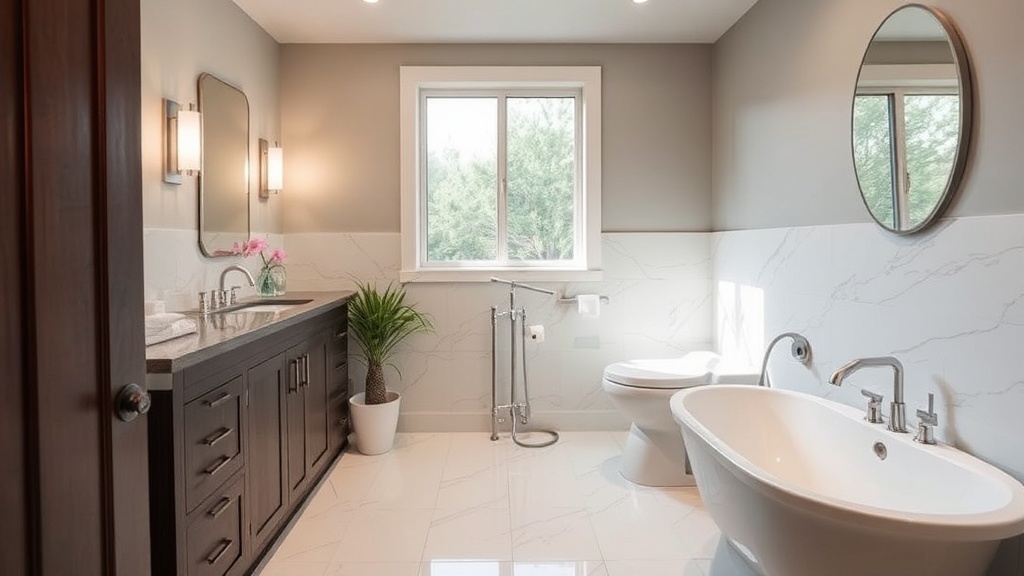
Design trends come and go, but some of what’s popular right now in Queens bathrooms actually makes a lot of practical sense. The whole spa-like bathroom concept isn’t just about luxury—it’s about creating a space where you can actually decompress after dealing with the commute and the chaos of city life. Think rainfall showerheads, freestanding tubs (if you have the space), and natural materials like stone and wood. It’s about bringing a little calm into a hectic existence, and honestly, who doesn’t need that?
Neutral color palettes continue to dominate, but not in that boring beige way we saw for years. We’re seeing lots of warm whites, soft grays, and earthy tones that feel sophisticated without being cold. Black fixtures and hardware have become hugely popular—matte black faucets, towel bars, and shower trim against white or light tile creates this striking contrast that photographs beautifully and looks even better in person. Some homeowners are getting bolder with colored vanities or patterned floor tiles, which can work really well when done thoughtfully.
Storage solutions are probably the most practical trend happening right now. In Queens bathrooms, where square footage is often limited, maximizing storage is crucial. Floating vanities that create visual space underneath, recessed medicine cabinets that don’t stick out into the room, built-in niches in showers—these aren’t just design choices, they’re necessities. I’ve seen some incredibly clever solutions in Queens bathrooms, like narrow pull-out cabinets squeezed into spaces you’d think were unusable. When you don’t have a lot of room, you get creative.
Technology integration is another big one. Heated floors used to feel like an extravagant luxury, but they’ve become pretty standard in higher-end Queens remodels. Smart mirrors with built-in lighting and defogging features, touchless faucets, and even smart toilets with all sorts of functions—these tech upgrades are showing up more and more. Some people think it’s overkill, but once you’ve experienced a warm bathroom floor on a January morning in Queens, it’s hard to go back to cold tile. The technology that actually improves daily life tends to be worth the investment.
Navigating Permits and Regulations in Queens
Here’s where things get a little tedious, but you absolutely cannot skip this part. Bathroom remodeling in Queens often requires permits from the New York City Department of Buildings. Not always—if you’re just swapping out fixtures and not moving any plumbing or electrical, you might be okay without permits. But anything involving structural changes, moving pipes, or significant electrical work? You need permits. Trying to skip this step to save time or money is one of the worst decisions you can make. It can come back to bite you when you try to sell, and it can create safety hazards.
The permit process in NYC is not exactly known for being quick or simple. You’ll need to submit plans, possibly hire a licensed architect or engineer depending on the scope of work, and wait for approvals. This can add weeks or even months to your project timeline. Your contractor should be able to guide you through this process—in fact, if they’re suggesting you skip permits for work that clearly requires them, that’s a major red flag. Run the other direction. A good contractor handles permit applications as part of their normal workflow.
Co-ops and condos add another layer of complexity. Your building likely has its own rules about renovations—alteration agreements, insurance requirements, working hours, approved contractors lists. Some buildings are incredibly strict about this stuff. Before you even start planning your bathroom remodel, check with your building management about what’s allowed and what hoops you’ll need to jump through. I’ve heard horror stories about homeowners who got halfway through a project only to have their building shut everything down because they didn’t follow proper procedures. Don’t let that be you.
Historic districts in Queens present unique challenges too. If you’re in an area like parts of Forest Hills Gardens or certain sections of Flushing, you may need to deal with the Landmarks Preservation Commission on top of regular building permits. This usually only affects exterior work, but it’s worth knowing about if your bathroom remodel involves anything visible from outside, like new windows. The layers of bureaucracy can feel overwhelming, but they exist to protect property values and neighborhood character. Work with professionals who understand these requirements.
Maximizing Small Bathroom Spaces
Small bathrooms are practically a Queens specialty. So many homes here have bathrooms that measure something like five feet by eight feet—and that’s if you’re lucky. Working with these constraints requires smart design thinking and a willingness to prioritize what actually matters to you. You probably can’t have everything you want, so figure out what’s non-negotiable. Is it a bathtub? A double vanity? A separate shower enclosure? Something’s got to give in most small spaces.
Visual tricks can make a small bathroom feel bigger than it is. Large-format tiles with minimal grout lines create a cleaner, more expansive look. Continuing the same tile from floor to walls—or at least using consistent colors—eliminates visual breaks that can make spaces feel choppy. Glass shower enclosures instead of curtains or frosted doors let light flow through the entire room. And mirrors, obviously. A large mirror above the vanity reflects light and creates the illusion of more space. These aren’t groundbreaking ideas, but they work.
The layout decisions in a small bathroom matter enormously. Sometimes shifting the toilet just a few inches or rotating the vanity orientation can make the difference between a functional space and one that feels cramped. Wall-mounted toilets are popular in small Queens bathrooms because they take up less visual space and make floor cleaning easier. Corner sinks and vanities can free up circulation room. Pocket doors instead of swinging doors eliminate that wasted arc of floor space. Every inch counts when you’re working with limited square footage.
Don’t forget about lighting—it’s huge in small bathrooms. Layered lighting with overhead fixtures, vanity lighting, and maybe even accent lighting creates depth and interest. Natural light, if you can get it, is the ultimate small-space enhancer. Skylights or solar tubes can bring daylight into interior bathrooms that don’t have windows. And dimmer switches let you adjust the mood from bright and energizing for morning routines to soft and relaxing for evening baths. Good lighting design can completely transform how a small bathroom feels.
Choosing Materials That Last in Queens Climate
The climate in Queens—hot humid summers, cold winters with occasional temperature swings—actually impacts material choices for bathroom remodeling more than people realize. Certain materials hold up better than others when dealing with moisture, temperature changes, and the general wear and tear of daily use. Making smart material choices upfront saves you from dealing with repairs and replacements down the road. It’s not the most glamorous part of planning a remodel, but it might be the most important.
Porcelain tile remains one of the most practical choices for Queens bathrooms. It’s durable, water-resistant, and available in literally thousands of styles—including convincing wood-look and stone-look options. Natural stone like marble is gorgeous but requires more maintenance and can be susceptible to staining and etching from bathroom products. If you love the marble look but don’t want the upkeep, porcelain tiles that mimic marble have gotten incredibly realistic. Honestly, you have to look really close to tell the difference with some of them.
For vanity countertops, quartz has become the go-to choice for good reason. It’s non-porous, so it doesn’t stain or harbor bacteria like natural stone can. It doesn’t require sealing. It’s tough enough to handle years of daily abuse. Solid surface materials and even high-quality laminate are viable options for more budget-conscious projects. Marble countertops are stunning but definitely higher maintenance—if you’re prepared for that, go for it. Just know what you’re signing up for.
Cabinetry and fixtures need to handle humidity, which is unavoidable in bathrooms. Plywood construction holds up better than particle board in humid environments. Look for cabinet finishes that resist moisture. For fixtures, brass and stainless steel outperform chrome in terms of long-term durability, though chrome remains popular for its lower price point. Whatever you choose, make sure there’s adequate ventilation in your bathroom—a good exhaust fan that you actually use makes a huge difference in how well all your materials hold up over time.
Working with Professional Contractors
Finding and working with the right contractor can make or break your bathroom remodeling experience. Queens has plenty of contractors to choose from, which sounds like a good thing but actually makes the selection process more challenging. How do you separate the skilled professionals from the ones who’ll disappear halfway through your project or cut corners when you’re not looking? Due diligence is your friend here. Take the time to vet potential contractors thoroughly before signing anything.
Start by verifying licensing and insurance—this is non-negotiable in New York City. Your contractor should have a Home Improvement Contractor license from NYC Consumer Affairs. They should carry general liability insurance and workers’ compensation coverage. Ask to see certificates of insurance, and actually verify them with the insurance companies. If a contractor hesitates to provide this documentation, move on. There are too many legitimate options out there to risk working with someone who can’t prove they’re properly credentialed.
Communication style matters more than you might think. During the estimating process, pay attention to how responsive the contractor is, how clearly they explain things, and whether they seem to actually listen to what you want. The contractor who gives you vague answers or seems annoyed by questions is probably going to be frustrating to work with throughout your project. You want someone who treats your project as important, keeps you informed about progress and problems, and responds to your concerns promptly.
Get detailed written contracts that spell out exactly what’s included—materials, labor, timeline, payment schedule, change order procedures, warranty information. Read the contract carefully before signing. Don’t let anyone rush you. A legitimate contractor expects you to review things thoroughly. And about payment: never pay the full amount upfront. A reasonable deposit (usually 10-30%) followed by progress payments tied to milestones, with final payment held until completion and your satisfaction, protects both parties. Anyone demanding full payment before work starts is waving a red flag right in your face.
Budget Planning and Cost Management
Getting realistic about budget might be the most important step in any bathroom remodel. Too many Queens homeowners start with champagne dreams on a beer budget, and that leads to disappointment or, worse, projects that stall out halfway through because the money ran out. Before you look at a single tile sample or browse shower fixtures online, figure out what you can actually afford to spend. Be honest with yourself. Add a contingency of at least 15-20% for the unexpected stuff that always comes up.
Understanding where the money goes helps with budget decisions. Labor typically accounts for 40-60% of a bathroom remodel cost—skilled tradespeople don’t come cheap, and you want skilled tradespeople working on your home. Fixtures, tile, and finishes make up much of the rest. The biggest cost driver is usually whether you’re doing a cosmetic refresh or a full gut renovation. Keeping plumbing and electrical in their existing locations saves significant money. Moving a toilet or shower even a few feet can add thousands to your project cost because of the plumbing work involved.
There are smart places to save money and places where cutting costs backfires. Splurge on things you touch and use daily—faucets, showerheads, toilet quality. These items impact your experience every single day. You can often save on tile by using high-end options as accents while more affordable tile covers larger areas. Stock vanities have come a long way in terms of style and quality—you don’t necessarily need custom cabinetry to get a great look. Where you shouldn’t skimp: waterproofing, plumbing, electrical, and ventilation. These behind-the-scenes elements protect your investment and prevent expensive problems later.
Consider phasing if your dream bathroom exceeds your current budget. Maybe you do the major work now and upgrade fixtures in a year or two when finances allow. Or perhaps you tackle the shower enclosure this year and plan the vanity upgrade for next year. This approach requires careful planning to avoid redoing work, but it can make an ambitious remodel achievable over time. Some contractors are willing to work with phased approaches if you’re upfront about your intentions from the beginning.
Final Thoughts on Queens Bathroom Remodeling
Remodeling a bathroom in Queens comes with unique challenges—space constraints, older building infrastructure, complex permit requirements, and the general intensity of doing any home improvement project in New York City. But it also comes with unique rewards. You’re improving a home in one of the most dynamic, diverse, and increasingly desirable areas of the country. The investment you make in your bathroom pays dividends in daily quality of life and long-term property value.
Take the time to plan properly. Rush into a bathroom remodel and you’ll almost certainly regret something—maybe the tile you chose too quickly, the contractor you hired without checking references, or the layout that doesn’t actually work for how you use the space. Good planning takes time but saves money, stress, and disappointment in the long run. Visit showrooms, talk to multiple contractors, look at completed projects in your neighborhood. The more informed you are, the better decisions you’ll make.
And remember that your bathroom should work for you and your life. Not what looks good in a magazine or what your neighbor did. Think about who uses this bathroom, how they use it, what frustrates them about the current setup, and what would genuinely make their daily routine better. Design from that foundation, and you’ll end up with a bathroom that you actually love using—which is really the whole point of doing this in the first place.